




- +91 9819-66-22-66
- info@rikhavadiamonds.com
- Mon-Fri 10am - 6pm
Quick Summary: Picking between yellow gold and white gold isn’t just about looks; it affects how your diamond shows up against your skin and how much upkeep you’re signing up for. This article breaks down both honestly, including the stuff most jewelers skip, so you end up with a pendant you’ll still love years from now.
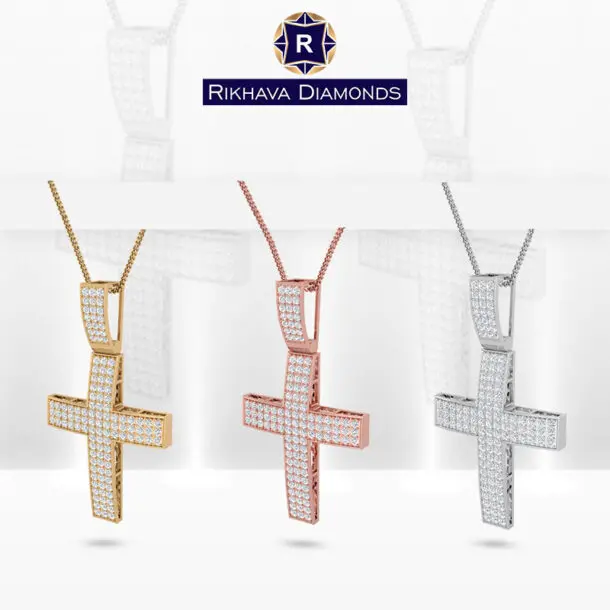
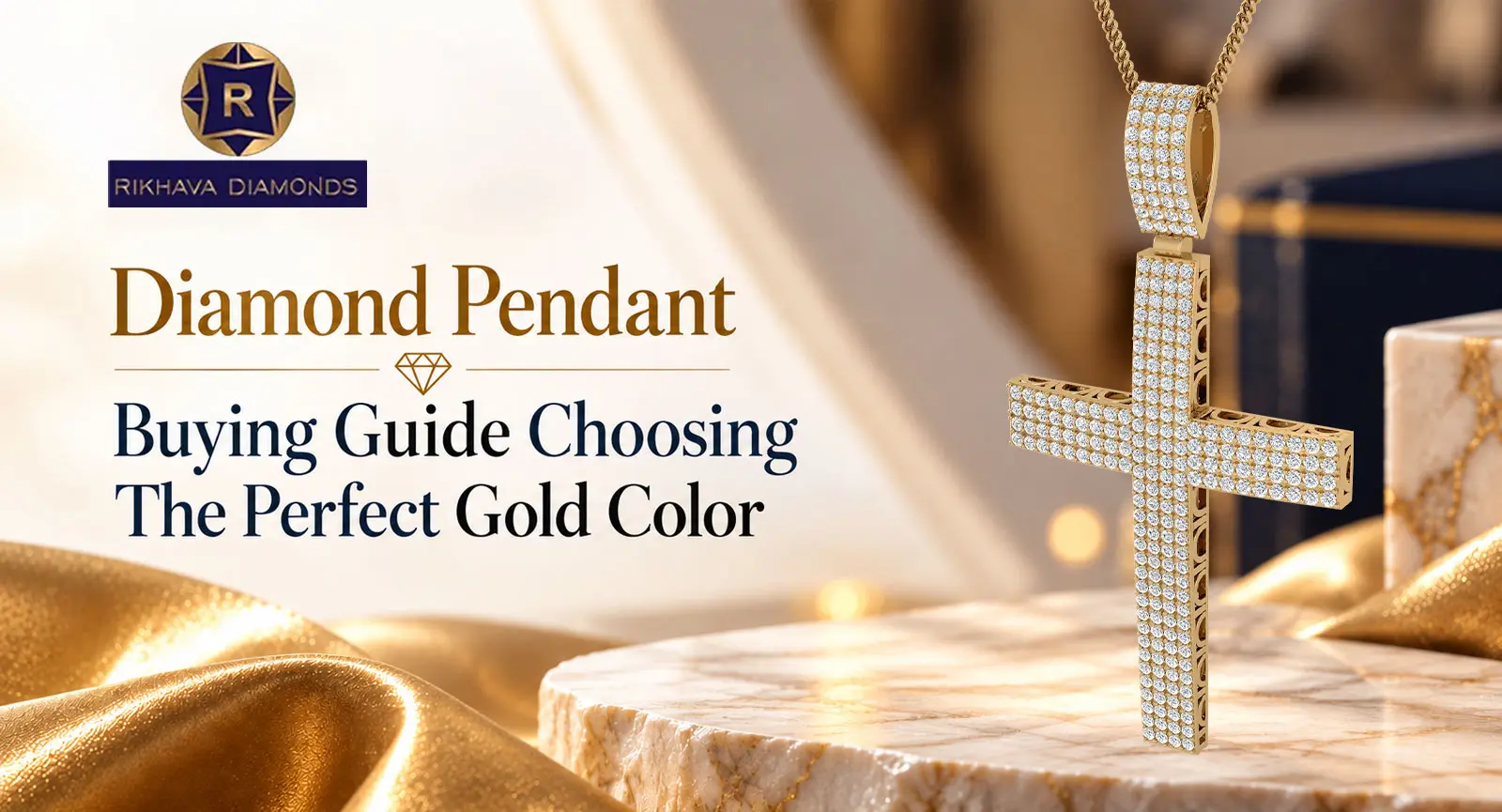
A diamond pendant gets worn a lot more than most jewelry buyers expect going in. It is placed right at the collarbone, catches light when you’re talking to someone, and within a few months it stops feeling like the good jewelry and just becomes part of what you put on in the morning. That’s precisely why the choice between a yellow gold diamond pendant and a white gold diamond pendant matters more than it seems to at first. The gold color you pick decides how the diamond matches against your skin, how much maintenance the piece will ask of you over the years, and how naturally it is placed alongside the other jewelry you already own. This article gets into what separates the two metals, what most retailers don’t bother explaining, and how to land on a pendant that suits both the stone and the person wearing it.
Here’s a pattern worth noticing: buyers obsess over cut, clarity, and carat weight, then treat the gold color like a footnote decided in the last five minutes at checkout. That’s the wrong order. The setting is what you see every single day, and it has a major effect on whether the diamond looks warm or cool. A stone with even a slight yellow tint tends to look better set in yellow gold, since the warmth of the metal blends right into it. Set that same stone in white gold, though, and the tint can suddenly stand out more than it should. Any jeweler who’s paying attention brings this up before the 4Cs get discussed, not after.
Yellow gold has been the go-to metal for fine jewelry for centuries, and honestly, it still has one advantage nothing else matches: it asks almost nothing of you beyond an occasional clean. Why that is so:
If you want something that looks basically the same the day you buy it as it does ten years later, without babying it, yellow gold is the more forgiving pick.
Here’s something a lot of buyers don’t realize until they’re already wearing it: white gold isn’t actually white. It starts life as yellow gold, gets alloyed with white metals like palladium or nickel, and then gets a thin rhodium coating on top to give it that bright, silvery finish. That last detail matters a lot, because it’s the whole reason white gold costs more to own over time.
If you like a sharper, more contemporary look and don’t mind the occasional trip back to the jeweler for a replate, white gold is worth the upkeep.
This is the part most buying guides skip entirely, and it’s the one that matters most. Here are some simple steps which you can follow to match the gold to your skin tone:
Skin tone isn’t the only thing that should decide this, but it’s the factor that most directly changes how the pendant looks once you’re wearing it out in the world, not sitting under a jewelry counter spotlight.
Even careful shoppers slip up here, usually because nobody walks them through it before they buy one. A few of these mistakes are easy to avoid once you know to look for them. These are as follows:
None of these mistakes are dealbreakers on their own, but catching even one or two before you check out can save you money, hassle, or a pendant you stop reaching for after a few months.
There’s no correct gold color, just the one that fits you best. If you want something easy to wear and easy to forget about, go with yellow gold. If you love a bright, clean shine and don’t mind a little upkeep, white gold is worth it. Either choice looks great; it really just comes down to what feels like you. And whichever one you pick, Rikhava Diamonds makes sure the diamond is what people notice first, not the metal around it.
At the same karat, the metal cost is usually close. The real cost difference shows up later, since white gold needs periodic rhodium replating that yellow gold simply doesn’t.
Yes, in a sense. It’s a yellow gold alloy blended with white metals like palladium, then finished with a rhodium coating to get that bright look.
Neither changes the diamond’s actual size. White gold’s brighter reflection can make a stone look a touch more brilliant, while yellow gold can make a warmer diamond look richer.
Rhodium plating can technically go over some yellow gold pieces, but it’s not standard and the results vary a lot, so it’s better to just pick the right color the first time.
14K holds up better for everyday wear and costs less, while 18K gives you a deeper color and higher gold content if you’re less worried about daily wear and tear.
Rikhava Diamonds is a premium brand that manufactures and supplies classy Diamond Jewellery worldwide. We carefully source original diamonds from trusted vendors to create exquisitely designed, top-notch diamond jewellery.